Is a Preschool Franchise Right for You? A Self-Assessment for First-Time Investors
A self-assessment for first-time investors considering a preschool franchise in India, covering money, time, temperament, family support and local knowledge, with a simple readiness score.
 Nidhi Mishra
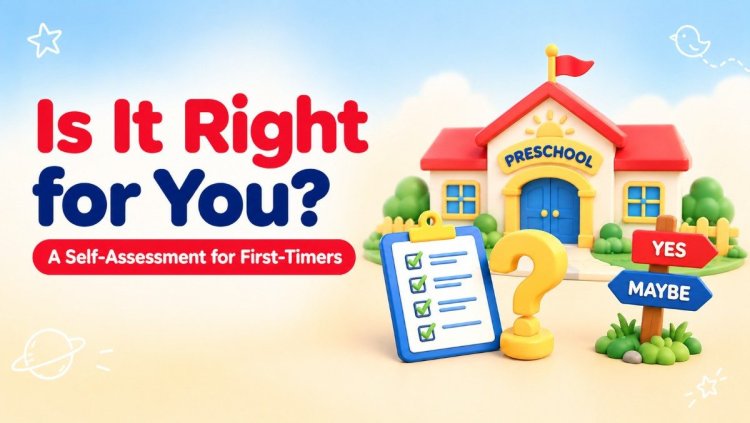
A preschool franchise is right for a first-time investor who has the money to open and survive a slow first year, the time to be present most mornings, the temperament to deal warmly with parents and staff, and family support for a demanding launch. Most guides focus on choosing the right brand. This one focuses on you. It gives a twenty-point self-assessment across five areas, explains what each score means, and shows which gaps can be fixed before you sign and which ones suggest waiting.
Why should a first-time investor assess themselves before assessing brands?
Because the owner's presence, money and temperament shape a preschool's success more than the differences between good brands.
A strong franchise system cannot replace an owner who is absent, under-funded or uncomfortable with parents. A preschool is a trust business. Parents notice who greets them, who answers their worries and who handles a difficult day. First-time investors who assess their own readiness early make better brand choices and avoid signing for a business that does not fit their life.
What are the five areas of readiness?
Financial headroom, time and presence, people skills, family and support, and local knowledge.
Score yourself honestly from 0 to 4 in each area, using the descriptions below. A total out of 20 gives a rough picture of readiness.
|
Area |
Score 0 to 1 |
Score 2 |
Score 3 to 4 |
|
Financial headroom |
Setup money only, no reserve |
Setup plus two to three months of costs |
Setup plus three to six months of costs and a contingency |
|
Time and presence |
Available a few hours a week |
Available some mornings |
Available most mornings for the first two years |
|
People skills |
Uncomfortable with complaints or managing staff |
Comfortable with one of these |
Comfortable with parents, staff and conflict |
|
Family and support |
No support for household load during launch |
Some support |
Clear agreement on household roles and backup care |
|
Local knowledge |
New to the area |
Know the area but few contacts |
Strong local network and understanding of families |
How should you read your total score?
A score of 15 or more suggests good readiness, 10 to 14 suggests readiness with specific gaps to fix, and under 10 suggests waiting or choosing a different model.
|
Total score |
What it suggests |
Next step |
|
15 to 20 |
Good personal readiness |
Move to brand comparison and site search |
|
10 to 14 |
Ready with gaps |
Fix the lowest area before signing |
|
Under 10 |
Not ready yet |
Build savings, time or support first, or consider other options |
A score is a prompt for honest reflection, not a test you pass or fail. The most important thing is to look at your lowest area, because that is usually where the first serious problem appears.
Which gaps can be fixed before signing?
Money, family support and local knowledge can usually be improved in a few months, while time and temperament are harder to change.
Financial gaps can be closed by saving longer, choosing a lower-cost brand, finding a smaller site or using a loan for part of the setup while keeping savings for working capital. Family support can be built through an honest conversation about household roles during the launch period. Local knowledge grows when you spend a few weeks meeting parents, society offices and other businesses in the area.
Time is harder. If you can only be present a few hours a week, a preschool may need a strong centre head from day one, which adds cost and risk. People skills can be developed, but if you dislike handling complaints, think carefully, because parent conversations are a daily part of the role.
What do successful first-time preschool owners have in common?
They are present, organised, warm with children and parents, realistic about money, and willing to follow the franchisor's system.
-
They greet parents at the gate in the first year, even when they have staff.
-
They keep working capital aside and do not spend it on extra interiors.
-
They hire one dependable lead teacher and treat that person well.
-
They follow the franchisor's curriculum and routines rather than reinventing them.
-
They keep marketing after opening and ask happy parents for referrals.
These traits matter more than an education background. Strong franchisors provide training to fill knowledge gaps. The brand's explanation of its support and training for new partners shows what that support typically covers.
How does your score affect the brand you should choose?
Investors with smaller financial headroom or less experience usually benefit from accessible, support-heavy brands, while experienced investors with large budgets can consider premium brands.
If your financial score is 2 or below, look closely at brands with a lower entry cost so that working capital stays protected. If your people or local knowledge scores are low, prioritise a franchisor with strong launch support and local marketing help. Brands focused on first-time partners, such as Shanti Juniors, which reports more than 500 franchise partners across 74 plus cities, are built around these needs. Read about the common mistakes first-time preschool owners make before you take the next step.
Frequently asked questions
Which preschool franchise is best for a first-time investor in India?
One with a manageable entry cost, structured training and strong launch support. Accessibility-focused brands such as Shanti Juniors are designed around first-time partners.
Do I need business experience to run a preschool franchise?
No, but you need organisation, comfort with people and willingness to follow a system. Franchisor training covers much of the operational knowledge.
Can I run a preschool franchise part-time?
It is difficult in the first two years. Owners who are present most mornings usually see stronger enrolment and fewer problems.
How much money should I have before starting?
Enough for the full setup, typically 8 to 30 lakh rupees depending on brand and city, plus three to six months of running costs.
What if my self-assessment score is low?
Fix the lowest area first, such as savings or family support, and reassess in a few months rather than rushing into an agreement.
Author Bio
Written by an independent education-sector analyst who studies India's early-education franchise market, including brands such as EuroKids, Kidzee, Little Millennium and Shanti Juniors.