Author Dr. Ashish Ahuja on The Lifestyle Prescription: Bridging Modern Medicine and Preventive Health
 brandmakerrd@gmail.com
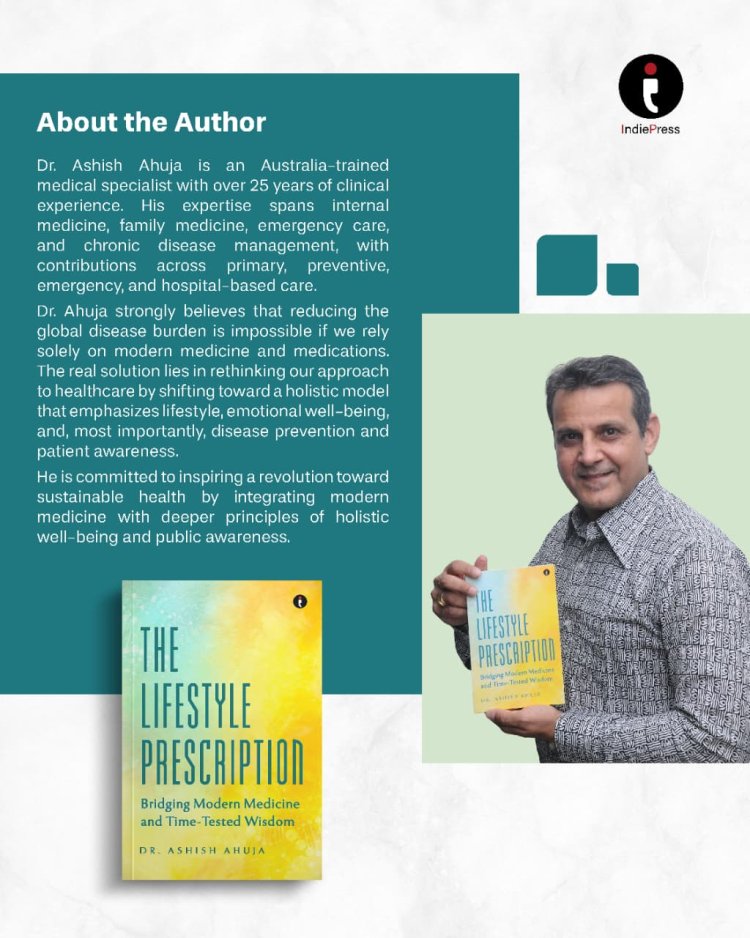
In The Lifestyle Prescription, Author Dr. Ashish Ahuja draws on over 25 years of clinical experience to explore the connection between modern medicine, preventive healthcare, and holistic well-being. The book examines how nutrition, physical activity, sleep, sunlight, and stress management influence health. Bridging modern medical science with time-tested traditional practices, including Yoga, meditation, and mindful living, Dr. Ahuja encourages readers to make informed lifestyle choices. Emphasising health literacy and disease prevention, the book offers a fresh perspective on taking greater responsibility for personal well-being while recognising the essential role of modern medicine in diagnosing and treating illness.
Author Interview: Dr. Ashish Ahuja
1. Can you provide an overview of your book and how it addresses key challenges in the world today?
This book presents a new perspective on health, medicine, and preventive living.
Modern healthcare, increasingly influenced by commercial interests, has largely focused on diagnosing diseases, prescribing medicines, and treating symptoms and complications. Undoubtedly, these interventions have saved countless lives and remain essential.
However, many of today's major health challenges are also closely associated with lifestyle, environmental factors, pollution, stress, sleep, nutrition, and physical inactivity.
My book encourages readers to look beyond treating illness and understand the everyday factors that influence their health. It explores how food, physical activity, sunlight, sleep, stress management, and the body's natural biological rhythms can contribute to better health.
The central message is simple: Health should not be something we think about only after we become ill; it is something we must actively nurture every day.
How My Book Addresses the Key Health Challenges in the World Today
A. The Growing Burden of Lifestyle-Related Diseases
Despite tremendous advancements in modern medicine, the global burden of many chronic diseases remains a major concern. What are we missing?
My book explores the role of modifiable lifestyle factors in disease prevention. It encourages readers to understand these factors scientifically and take charge of their health rather than wait for diseases to develop.
B. Modern Lifestyles and Disrupted Biological Rhythms
Modern lifestyles increasingly disconnect us from our natural biological rhythms, disrupting our circadian clocks and potentially contributing to the development of various diseases.
My book explains the scientific importance of circadian rhythms, sunlight and the body's internal clock in maintaining health.
C. Chronic Stress and Declining Emotional Well-being
Work pressure, social isolation and constant digital stimulation expose us to persistent, often subtle, and unrecognised , chronic stress—a growing feature of modern life.
My book explores the stress response, the hypothalamic–pituitary–adrenal (HPA) axis, the nervous system and the mind–body connection, helping readers understand how stress affects sleep, behaviour and physical health. It also discusses practical measures to manage stress and support overall well-being.
D. Confusion About Food, Nutrition and Metabolic Health
Excessive food availability, conflicting nutritional advice, highly processed foods and unhealthy eating patterns contribute to growing metabolic health challenges.
My book explores food as both nourishment and medicine. It discusses calorie regulation, food quality, insulin resistance, the gut microbiome and the body's mechanisms for energy management and cellular repair. The emphasis is on understanding the principles of healthy eating rather than simply following restrictive diets.
E. Integrating Time-Tested Health Practices with Modern Medicine
Traditional health practices have been passed down through generations, yet their underlying principles are not always fully understood in the context of modern science.
My book explores Yoga, Surya Namaskar, meditation, mindful living and our relationship with the natural environment, examining their relevance to health and well-being.
Rather than asking readers to choose between traditional wisdom and modern medicine, I encourage them to appreciate the potential of both. I believe that integrating scientifically supported traditional practices with modern medical advances can open new avenues for disease prevention and better health.
2. What inspired you to write this book, and what specific expertise or experiences do you bring to the subject matter?
My inspiration to write this book comes from over 25 years of clinical experience, during which I have witnessed the growing burden of disease despite tremendous scientific and technological advancements in modern medicine.
I realised that one of the contributing factors may be the healthcare system’s approach, which focuses on treating illnesses after they develop rather than placing greater emphasis on prevention. I believe that effective prevention begins with educating people and improving health literacy, empowering them to make informed decisions about their health before diseases develop.
I felt the need to bridge the gap between modern medical science and the time-tested wisdom of traditional practices, making health knowledge accessible to everyone.
As a physician with experience in hospital medicine, family medicine and emergency care, I have seen firsthand the importance of prevention and health education. My aim is to empower people with scientific knowledge and practical lifestyle strategies so they can take greater responsibility for their health and well-being.
3. Could you share some of the most valuable insights or takeaways that readers can expect from your book?
Readers will gain a better understanding of how everyday lifestyle choices influence their health and how they can apply scientific knowledge to prevent disease. The book explores the importance of right food with right habits, physical activity, sunlight, circadian rhythms, sleep and stress management, while explaining the science behind practices such as Yoga, Surya Namaskar and meditation. It also helps readers understand the role of the gut microbiome, inflammation, metabolic health and the body's natural repair mechanisms. Above all, readers will discover how modern medical science and time-tested traditional wisdom can complement each other to promote better health and improved overall well-being.
4. Can you highlight any case studies or real-world examples from your book that illustrate the principles you discuss?
Throughout my 25 years of clinical experience, I have witnessed numerous remarkable cases of healing and recovery that have reinforced my belief in the importance of a holistic approach to health. I have seen patients achieve significant improvements, and in some cases, complete relief from their symptoms and/or disease, through traditional practices and lifestyle modifications, under my guidance and consultation, particularly when conventional medical options either had been exhausted or were no longer acceptable to the patient.
One such example was a patient suffering from intractable and debilitating migraines who had exhausted available medical therapies and was tired of taking medications. She eventually chose to explore a traditional approach, and six months later, she reported complete resolution of her symptoms.
Another deeply personal example is that of my mother (as described in the book), whose remarkable recovery following major surgery, chemotherapy, and radiotherapy—without any complications—demonstrated the importance of resilience, faith, gratitude, and comprehensive support throughout the healing journey.
These are just a few examples among many from my clinical experience that have left a lasting impression on me. While every patient’s journey is unique, such experiences have strengthened my conviction that health is influenced by multiple factors and that lifestyle, mind–body practices, and traditional approaches may have an important complementary role alongside modern medicine. These real-world experiences are an integral part of the philosophy behind my book: empowering people to understand their health better and explore the many ways they can support their body’s capacity to recover and thrive.
5. Are there any particular challenges or obstacles you encountered while writing this book, and how did you overcome them?
One of the biggest challenges was expressing complex medical and scientific concepts into simple, engaging language that even a layperson could understand and apply in daily life. Writing for the general public required a different approach—one that made the science understable without compromising its accuracy.
Another challenge was bringing together modern medical science and time-tested traditional practices, particularly those rooted in Sanātan traditions that have been followed for millennia, in a way that would resonate with people of all beliefs and backgrounds. After all, Sanātan, in its broader philosophical sense, represents not a religious identity but a “way of life.” However, over the years, it has often been misunderstood, misrepresented and polarised. Presenting these traditions in a balanced, meaningful and scientifically informed manner, while making them relevant to contemporary life, was therefore another challenge.
I wanted readers to understand not only what they should or should not do to improve their health, but also why certain practices may be beneficial. Wherever possible, I have explained the underlying scientific principles and supported the discussion with relevant evidence.
6. What do you hope readers will gain from reading your book, and how do you envision it making a positive impact on their lives?
My foremost hope is to empower readers with health literacy, helping them gain a deeper understanding of their own bodies and realise how profoundly their everyday lifestyle choices influence their health and well-being. I want them to understand that while modern medicine is extraordinary in diagnosing and treating diseases, it also has its limitations. Hence, we must make every possible effort to prevent illness, thereby improving our health and quality of life.
Through this book, I hope readers will appreciate the science behind nutrition, physical activity, sunlight, sleep, circadian rhythms and stress management, while also understanding the relevance of time-tested traditional practices such as Yoga, Surya Namaskar, meditation and mindful living.
More importantly, I hope readers recognise the immense potential of integrating modern medical science with the wisdom of traditional practices to promote health and well-being worldwide. At the same time, I aim to equip readers with the health literacy needed to distinguish evidence-based practices from unsupported claims and make informed decisions about their health.
Ultimately, I hope this book inspires a shift in mindset—from relying predominantly on tablets and medical interventions to taking greater responsibility for our health through conscious, everyday lifestyle choices. If even a few readers make positive and lasting changes that improve their health, prevent avoidable illness or inspire their families and communities to embrace healthier lifestyles, I would consider the purpose of this book fulfilled.
7. In a rapidly changing environment, how does your book stay relevant and adaptable for readers over time?
My book remains relevant because, while medical science continues to evolve, the fundamental principles of good health—nutrition, physical activity, sleep, stress management and preventive care—remain essential. By combining modern medical science with time-tested traditional wisdom, it empowers readers with health literacy to make informed and sustainable lifestyle choices.
Science is advancing rapidly, with new research continually uncovering insights, challenging established beliefs and deepening our understanding of health. My second book is already underway, through which I hope to explore these evolving perspectives further and continue my mission of promoting health awareness, disease prevention and holistic well-being.
About the Author
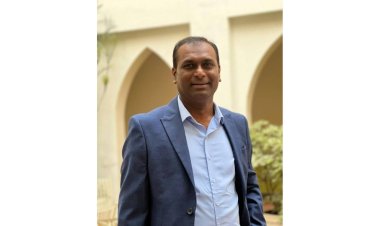
Dr. Ashish Ahuja is an Australia-trained medical specialist with over 25 years of clinical experience. His expertise spans internal medicine, family medicine, emergency care, and chronic disease management, with contributions across primary, preventive, emergency, and hospital-based care.
Dr. Ahuja strongly believes that reducing the global disease burden is impossible if we rely solely on modern medicine and medications. The real solution lies in rethinking our approach to healthcare by shifting toward a holistic model that emphasizes lifestyle, emotional well-being, and most importantly, disease prevention and patient awareness. He is committed to inspiring a revolution toward sustainable health by integrating modern medicine with deeper principles of holistic well-being and public awareness.
About the Book
The Lifestyle Prescription
What if true healing requires more than a prescription?
In a world of groundbreaking surgeries and life-saving drugs, we are living longer, yet feeling more unwell than ever. The Lifestyle Prescription uncovers the missing link between modern medicine and spiritual wisdom, revealing why treating the body alone is not enough. Science may save your life in a crisis, but lasting health is built in the quiet, daily choices that shape your mind, habits, and sense of purpose.
Blending research with practical guidance, from mindfulness to movement and time in nature, it shows how medicine adds years to life, while holistic living adds life to those years.
Discover The Lifestyle Prescription by Dr. Ashish Ahuja, a book exploring preventive healthcare, lifestyle choices, and the relationship between modern medical science and traditional wellness practices.
Drawing on more than 25 years of clinical experience, Dr. Ahuja shares his perspective on health awareness, everyday habits, and the role of prevention in supporting overall well-being.
Buy The Lifestyle Prescription on Amazon today and explore a more proactive approach to health and wellness.