Manisha Sarma: The Assamese Writer Who Walked Into Sonagachi to Give Voice to the Voiceless
 maniv
maniv
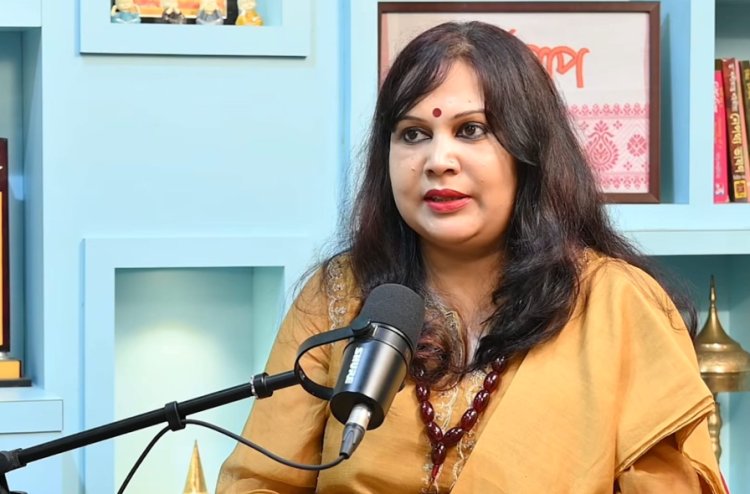
Guwahati — In contemporary Assamese literature, few voices carry the combination of courage, versatility and empathy found in the work of writer, journalist and social worker Manisha Sarma. Hailing from Jalukbari, Guwahati, Sarma has built a distinct literary identity over the past decade, one defined less by comfortable observation than by direct, often dangerous, immersion in the lives of the communities she writes about.
While her body of work already spans poetry, short stories, novels, plays and essays, it is her approach to research that has drawn particular attention. Refusing to write about marginalised lives from a distance, Sarma has repeatedly stepped into restricted and stigmatised spaces to gather her material firsthand, pushing past social taboos in the process.
A Foundation Built on Values and Resilience
Manisha Sarma is the daughter of educator and writer Nripendra Nath Sarma and Bharati Devi, and she grew up in a household shaped by academic rigour and a strong sense of social responsibility. Her own path to a literary career, however, was not a straightforward one. Financial and family hardships interrupted her education at various points, and she married businessman JituMani Sarma early, in 2002.
Rather than closing the door on her ambitions, marriage marked a turning point supported by those around her. With the backing of her husband, her family and eventually her son, Sarma went on to complete her Master's degree after marriage, before fully committing herself to literary and social work — a decision that would come to define the following two decades of her life.
Fearless Fieldwork in Restricted Spaces
What sets Sarma apart from many of her literary peers is her insistence on direct, ground-level research, even when that research takes her into some of the most sensitive and difficult environments in the country. Most notably, she has conducted fieldwork in heavily restricted red-light districts, including Kolkata's Sonagachi, one of Asia's largest red-light areas, along with several other similarly taboo locations.
As a woman entering these spaces, Sarma's presence itself represented a boundary being tested. Rather than observing from a distance, she spent time directly interacting with sex workers in these communities, listening to their lived realities and documenting their daily struggles with what has been described as profound dignity. Her stated approach has consistently avoided judgment, framing her work instead around two goals: authentically researching the conditions faced by these communities for her writing, and using her platform to actively advocate for their human rights and welfare.
An Investigative Spirit Across Regions and Themes
Sarma's fieldwork is not limited to red-light districts. Her investigative approach has taken her across a wide range of regions and social themes, each feeding directly into a specific body of published work.
- Red-Light Districts & Marginalised Lives — Groundwork conducted in Sonagachi and other restricted areas inspired powerful writings that highlight human suffering, resilience and rights within these communities.
- Cultural & Regional Studies — Immersive research across Mathura, Vrindavan and Gokul in Uttar Pradesh produced Braj Bhumir Baibhav, while her exploration of Assam's local folklore, centred on Mayong, resulted in Chonokar Rod.
- Human-Wildlife Conflict — Field investigations into the ongoing human-elephant conflict in Assam led to her acclaimed book Hati Aru Phandi as well as the script for the film Manuh Khowa Hati.
A Prolific and Recognised Literary Career
Sarma's writing career began with her first poetry publication in Asamiya Pratidin, and has since grown into a substantial body of stories, novels, plays and essays published across more than a decade. Her notable works include Sukhor Madakatat Dukhor Banya (2014); Rodon, Kalcakra, Samay Sanglap, Rupali Jonak and Jonakar Borosun, all published simultaneously in 2018; Mon Ciyahir Rong (2020) and Kathopakathan (2021); Nishiddha Duwar alongside the bestseller Teje Dhowa Kolijar Ucupani (2022); and more recently, Jibanor Okowa Pokowa Aliyedi (2023) and Bhem (2024).
This substantial and varied output has earned Sarma a wide range of accolades. She received the Basanti Bordoloi Award (2020) from the Assam Sahitya Sabha for her novel Rodon, the Japan Ukiyoto Publishing Women Writer of the Year (2022), and the Babu Jagjivan Ram National Award (2022). More recently, she was named Best Novel of the Year at the National Sports and Cultural Festival (2026) and received recognition at the Kolkata International Micro Film Festival (2026) for Aadamkhor Hathi, a further extension of her work on human-elephant conflict into film.
A Voice for Change Beyond the Page
Sarma's work extends well beyond her published writing. She currently serves as a journalist for Pragjyotish, bringing the same investigative instincts that shape her literary fieldwork into her reporting. Alongside this, she holds a leadership role as District Director for Kamrup Metro with the Human Rights International Organization, and serves as Bureau Chief of Assam for Rastra Sangbad Org.
In addition to these formal roles, Sarma remains actively involved with environmental, literary and youth organisations, reflecting a broader commitment to social engagement that runs parallel to, and often intersects directly with, her literary output.
Literature as a Tool for Social Transformation
Across her body of work, Manisha Sarma has consistently demonstrated that literature can function as more than an artistic exercise. By stepping into restricted spaces — from Sonagachi's red-light district to the folklore-rich landscapes of Mayong and the conflict zones between humans and elephants in Assam — she has used her writing as a vehicle for documenting lives that might otherwise remain unseen.
Her approach, combining fearless fieldwork with a prolific literary output and an active role in journalism and human rights advocacy, has positioned her as a distinctive figure in contemporary Assamese literature. As her list of published works and accolades continues to grow, Sarma's willingness to step past societal taboos in pursuit of authentic storytelling remains the defining thread running through her career.
About Manisha Sarma
Manisha Sarma is an Assamese writer, journalist and social worker based in Jalukbari, Guwahati. Known for her immersive field research into marginalised communities, including sex workers in Kolkata's Sonagachi and the human-elephant conflict in Assam, she has authored numerous acclaimed novels, story collections, plays and essays. Her honours include the Basanti Bordoloi Award, the Japan Ukiyoto Publishing Women Writer of the Year, the Babu Jagjivan Ram National Award, and recognition at the National Sports and Cultural Festival and the Kolkata International Micro Film Festival. She currently works as a journalist for Pragjyotish and holds leadership roles with the Human Rights International Organization and Rastra Sangbad Org.