Lokesh Sirswal’s The Whispers of the Valley Wins Rabindra Ratan Puruskar 2025 for Shattering Literary Norms.
 publisher@engame.in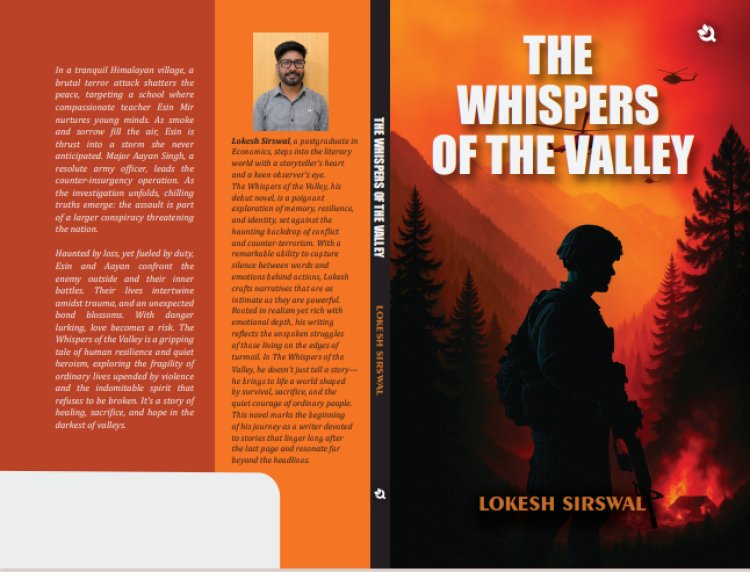
In a stunning literary triumph, The Whispers of the Valley by Lokesh Sirswal has clinched the prestigious Rabindra Ratan Puruskar 2025. The novel is not just a story. It is an emotional uprising, a cinematic avalanche, and a soul-searing reminder of what storytelling can and should do in turbulent times.
Set against the hauntingly beautiful yet volatile Himalayan backdrop, the novel slices through the noise of routine thrillers and plunges into uncharted emotional territory. Readers are not just swept into a narrative. They are held captive by it. From the very first page, Sirswal crafts a pulse-pounding yet poetic narrative that grips, bruises, and transforms.
What propels The Whispers of the Valley to such staggering acclaim is its unflinching emotional authenticity. It is not about war but about what war does to the quiet lives caught in its crosshairs. The anguish of a grieving child doesn’t beg for sympathy. It demands to be witnessed. The courage of a schoolteacher doesn’t shine. It burns. And the silence of a soldier isn’t still. It echoes.
At the heart of this literary quake stands Esin Mir, a female protagonist whose presence redefines how women are portrayed in conflict literature. She is not designed to impress but to imprint. Her journey is neither glamorous nor tragic. It is raw, real, and relentless. Esin does not fight for glory. She survives because giving up would be an injustice to everything she believes in. Sirswal doesn’t offer her as an icon. He offers her as a mirror.
Unlike many contemporary thrillers that lean on plot gimmicks and glossy adrenaline, this novel strikes with a different weapon: truth. Sirswal constructs scenes with such visual clarity that one almost forgets they are reading. Snowflakes settle on shoulders, distant gunshots jolt the chest, and whispered fears crawl under the skin. The book breathes cinema but bleeds poetry. Its pacing is that of a thriller, but its soul belongs to literature.
Critics and readers alike have hailed it as a landmark in Indian fiction, and for good reason. The Whispers of the Valley isn’t timely because it addresses terrorism and unrest. It is timeless because it elevates the human experience above geopolitics. It mourns what is lost, questions what is justified, and never stops asking what peace really costs.
Lokesh Sirswal does something rare. He lets the forgotten speak. Village schoolteachers, widowed mothers, displaced children, and wounded jawans are not side characters. They are the lifeblood of this narrative. He doesn’t reduce them to metaphors or policy points. He gives them breath, history, heartbreak, and hope. And that is where the novel detonates—quietly but irreversibly.
The Rabindra Ratan Puruskar jury called it a “defiant work of empathy” and “a new milestone in narrative integrity.” But the book’s true impact is not found in awards or reviews. It is found in the reader’s pause, in the lump that forms in the throat, in the memory of Esin long after the last page is turned.
The Whispers of the Valley does not ask for attention. It earns it. It does not shout. It resonates. Lokesh Sirswal has not written a book. He has ignited a movement. And the Rabindra Ratan Puruskar 2025 is not just a trophy on his shelf. It is a thunderclap recognition of a voice India didn’t know it was waiting for.